
Scaling a content production agency is not only about hiring more people or selling more projects. It is about building a reliable system that helps the team produce high-quality work under pressure. Without a strong library of digital assets, every project starts from zero. Designers search for references again. Editors rebuild templates. Writers recreate structures. Producers lose time finding files that should already be organized.
A digital asset library turns repeated work into reusable infrastructure. It gives the team a shared foundation for speed, consistency, and quality. The best agencies do not rely only on talent. They build systems that make talented people faster and more reliable.

Why Digital Assets Matter for Scaling
When an agency is small, informal systems may work. A designer remembers where the files are. A producer keeps templates on a personal drive. An editor uses their own presets. But as the team grows, this creates bottlenecks. Knowledge stays inside individuals instead of becoming part of the agency.
Digital assets help agencies scale because they:
- Reduce repetitive work
- Improve consistency
- Speed up production
- Support onboarding
- Protect brand quality
- Reduce dependency on one person
- Make deadlines easier to manage
- Help teams reuse proven structures
A content agency that wants to grow needs a library that supports daily production, not just a messy archive of old files.
Brand Kits and Visual Guidelines
Every content production agency needs organized brand kits. These may be internal brand assets for the agency itself or client-specific brand kits for recurring work. A brand kit prevents teams from guessing colors, fonts, logos, tone, layout rules, or visual references.
A strong brand kit includes:
- Logo files in correct formats
- Color palette
- Typography rules
- Spacing and layout principles
- Icon style
- Image style
- Tone-of-voice notes
- Approved examples
- Common mistakes to avoid
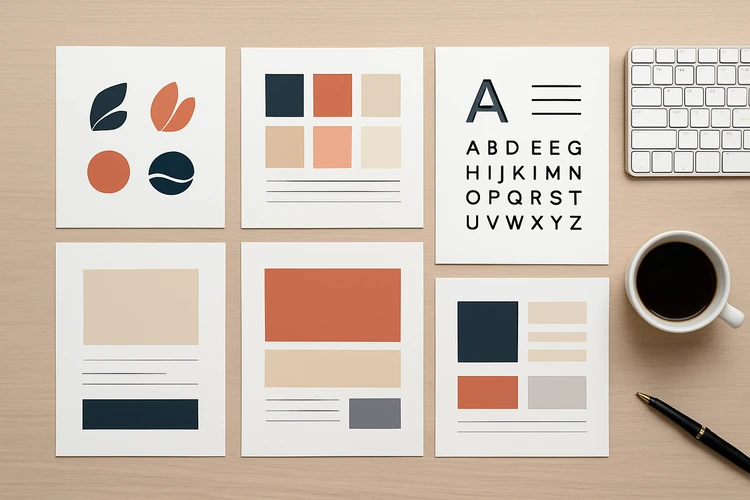
For client work, brand kits should be easy to access before production begins. This prevents errors that appear late in review, when they are more expensive to fix.
Templates for Repeatable Deliverables
Templates are one of the most valuable assets for a production agency. They reduce setup time and help maintain consistency. A template should not make work generic. It should remove unnecessary friction so the team can focus on content quality.
Useful templates include:
- Social media post templates
- Video thumbnail templates
- Presentation templates
- Blog article structures
- Email newsletter layouts
- Landing page wireframes
- Proposal templates
- Creative brief templates
- Production schedule templates
- Reporting templates
Templates should be flexible enough to adapt but structured enough to save time.
Stock Visuals, Illustrations and Photography
Content production often requires fast access to high-quality visuals. Agencies should maintain approved sources and curated folders for stock photography, illustrations, textures, icons, backgrounds, product mockups, and editorial visuals.
The library should be organized by use case, not only by file type. For example, instead of one huge “Images” folder, create categories such as SaaS hero visuals, team collaboration, abstract technology, lifestyle business, product backgrounds, editorial textures, and social media patterns.

A visual asset library should track licensing. If the team cannot confirm usage rights, the asset should not be used in client work.
Motion Graphics and Video Presets
Video production teams need reusable motion assets. These assets reduce editing time and help maintain a consistent visual language across campaigns, channels, and clients. Motion assets are especially important for agencies producing short-form videos, ads, explainers, reels, and social content.
Essential motion assets include:
- Intro and outro templates
- Lower thirds
- Title animations
- Transition presets
- Animated icons
- Caption styles
- End screens
- Logo reveal templates
- Sound effect packs
- Export presets
Good motion systems allow editors to move quickly without making every video look identical.
Audio Assets and Sound Libraries
Audio is often underestimated, but it strongly affects perceived quality. A content agency should maintain a clean library of music, sound effects, transitions, notification sounds, ambience, and voiceover resources. This is especially important for video, podcast, reels, ads, and educational content.
An audio library may include:
- Licensed music tracks
- Short loops
- Sound effects
- Audio transitions
- Podcast intro elements
- Background ambience
- Voiceover guidelines
- Audio mixing presets

Every audio asset should have clear licensing information. Music rights problems can create serious issues for clients.
Copywriting Frameworks and Content Structures
Content agencies should not depend on a blank page. Writers and strategists need reusable frameworks for common content types. These frameworks help maintain quality while allowing customization for each client.
Useful writing frameworks include:
- Blog article outlines
- Case study structures
- Landing page copy frameworks
- Ad copy formulas
- Email sequences
- Social media caption structures
- Video script templates
- Interview question banks
- Content brief templates
- SEO metadata templates
Frameworks are not meant to replace thinking. They create a strong starting point so writers can spend more energy on insight, positioning, and originality.
Project Management and Production Boards
A content agency needs operational assets as much as creative assets. Project boards, task templates, approval workflows, calendars, and checklists keep production moving. Without them, teams rely on memory and chat messages, which creates missed steps.
Useful operational assets include:
- Project kickoff checklist
- Creative brief form
- Production calendar
- Task board templates
- Review and approval workflow
- Client feedback tracker
- Asset delivery checklist
- QA checklist
- Revision log
- Publishing schedule

These assets reduce confusion and make it easier for new team members to join projects quickly.
AI Prompt Libraries and Automation Assets
Modern content agencies increasingly use AI tools for ideation, research support, outline generation, image concepts, repurposing, and production assistance. To use AI consistently, agencies should build prompt libraries and automation assets.
AI assets may include:
- Research prompts
- Content outline prompts
- Image generation prompts
- Video concept prompts
- SEO brief prompts
- Repurposing prompts
- QA prompts
- Brand voice prompts
- Client-specific prompt templates
- Automation workflows
The prompt library should include examples of good outputs, tool notes, and warnings about what not to use AI for. This prevents inconsistent results and helps the team work faster.
File Naming and Folder Structure
Even the best assets become useless if nobody can find them. File naming and folder structure are basic but critical. A scalable agency needs a shared system that everyone follows.
A practical file naming system may include:
- Client name
- Project name
- Asset type
- Version number
- Date
- Status
Example structure:
- Client_Project_AssetType_V01_Date
- Client_Project_AssetType_Final_Date
- Client_Project_Platform_Format_Date
Folder structures should separate working files, exports, source assets, client feedback, final deliverables, and archived projects.
Quality Assurance Checklists
Quality assurance is the final defense against mistakes. Agencies should have checklists for design, copy, video, SEO, accessibility, brand compliance, and export settings. A checklist is not a sign of low skill. It is a sign of professional production discipline.
A QA checklist may include:
- Correct dimensions
- Correct file format
- Brand colors and fonts
- No spelling errors
- Links tested
- Captions checked
- Audio levels reviewed
- Licensing confirmed
- Accessibility basics checked
- Final approval recorded
Final Thoughts
A content production agency grows stronger when it turns repeated work into reusable systems. Digital assets are not just files. They are infrastructure. They help teams move faster, maintain quality, onboard people, and deliver under pressure.
The essential asset library should include brand kits, templates, visual assets, motion graphics, audio, copy frameworks, project boards, AI prompts, folder systems, and QA checklists. When these pieces are organized, the agency can scale without chaos. Creative work becomes less dependent on last-minute heroics and more supported by a system built for repeatable excellence.